Reinvestment When Selling a Business
If you stay invested after the sale, part of the purchase price isn't paid out in cash but reinvested as a stake. This guide explains how reinvestment works, where the value is created — and where the traps are.

Get the resource for free
Table of contents
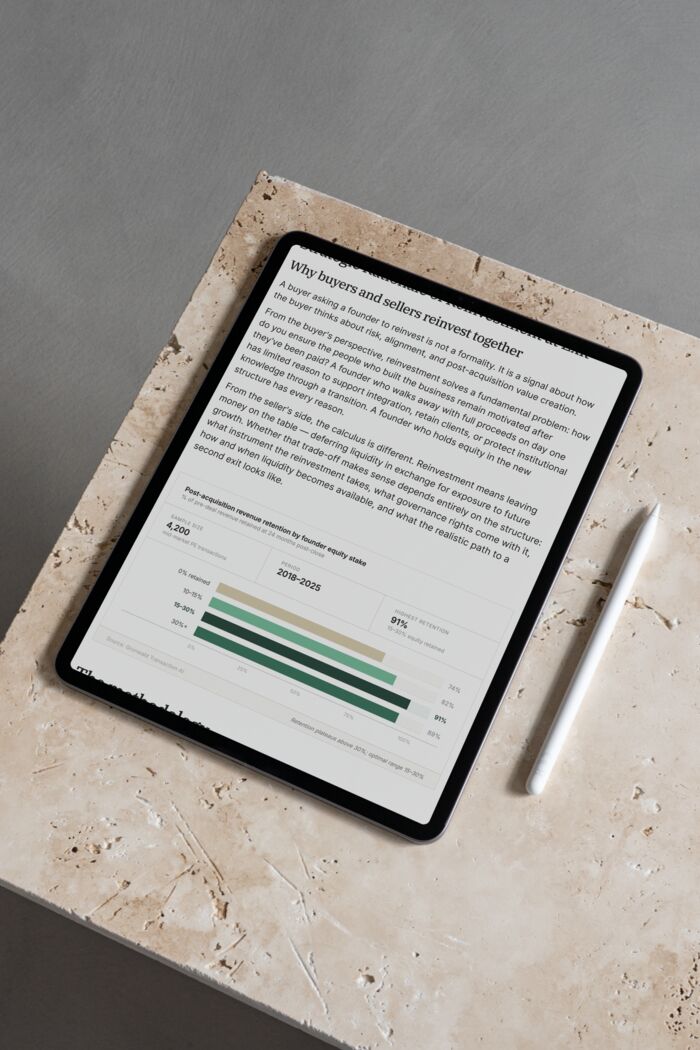
Chapter 1
Fundamentals & Structures
Understand why buyers ask you to roll equity back into the deal — and how rollover, sweet equity and co-investment reshape your stake, your upside and your control after the sale.

Chapter 2
Valuation, Dilution & Worked Example
See exactly how your entry valuation, liquidation preference and dilution decide what your reinvested stake is really worth — worked through a full waterfall.
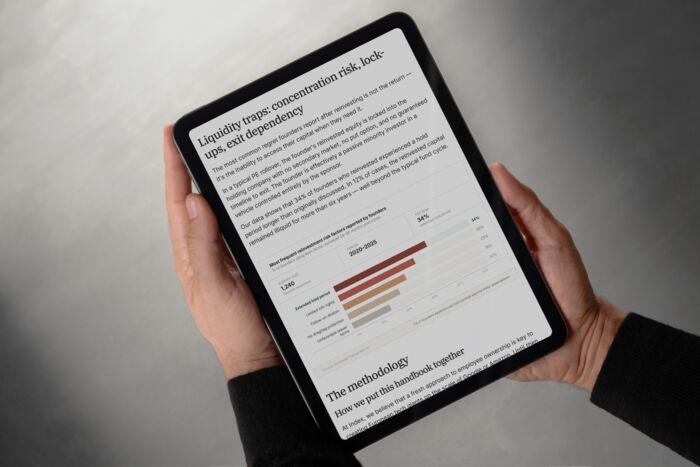
Chapter 3
Risks, Tax, Negotiation & Conclusion
Walk in with eyes open: the six risks that erode rolled equity, the tax angles that decide your net return, and seven moves to protect your position.

Here's what founders and advisors say

Sophie van der Berg
CEO @ VDP
“I read this before our first advisor meeting, and it completely changed how we approached the deal structure.”
About the author

Felix Buschkotte
Advisor @ Grunwald
An IT entrepreneur for over seven years with a successful exit. He has guided the sale of his own family business as well as numerous private-equity acquisitions as an advisor.
Join Maximilian, Anna and 50 more readers
Built for founders and advisors.